Richmond is seeing its snowiest winter in recent memory this year. It's almost as though all the jokes about runs on the local grocery stores for milk, eggs, and bread when the word "snow" hits the forecast have finally brought karmic retribution back on us in the form of two good-sized storms. Each has dumped nearly a foot of snow on the area and paralyzed businesses and shut schools. The kids have had a hell of a time, and parents are running out of ways to amuse them. After all, there's only so much you can do when you live in the heart of the city to send your kids out to pasture.
There have been some collateral benefits, however. They include slowing down by necessity and re-acquainting ourselves with the house, and remembering to cook more and use more of the food that stuffs the fridge. Recent adventures have included remembering how to make crépes, gingerbread and biscotti (thanks to L), fondue, chili, and more.
Last night's adventure was more of a culinary break than I've made lately. Facing down dwindling supplies of various staples and specialty items, I knew we had a few hurdles to cross. L is a pescatarian, which means I have to temper my meat-loving tendencies for some meals or find a general balance in others. The Kid has lately gotten even pickier about what she'll eat — a foodie kid losing her omnivorousness is another post for another time. Lastly, I realized feeding us all at the same time wasn't going to work. Solution time...
The kid got pesto pasta. It's not the most creative solution, but some penne with TJ's pesto on it is a sure-fire silver bullet when she's hungry and tired. Add a bit of feta and a few grape tomatoes, and the meal is complete and easy to put together while she hangs out with us.
For L and I, I concocted a wholly different idea. I had lentils that had been around a while, a small stash of grape tomatoes, an onion, garlic, and a well-stocked spice cabinet. A quick check of Saveur brought up an Ethiopian lentil stew. That combined with some savory whole-wheat crépes started to sound a whole lot like an improvised Ethiopian dinner. The lentils took about an hour to cook and come together. It was the right amount of time for mixing up a quick crépe batter and running the crepes. I pulled one of the small zucchinis in the fridge and sliced it into quarter-inch-thick half-moons. These I tossed with a bit of olive oil, cumin, salt and pepper, and put on a baking pan to roast while L was working on biscotti, round 2.
When the crépes were ready, I laid out one on each plate as one might find a bed of injera in an Ethiopian restaurant and then added two more, folded to quarters, to section off the plate. On one side went the zucchini, and on the other a pile of lentils topped with a small dollop of plain yogurt. On a shared plate, I put out The lentils weren't as spicy as I'd hoped, so I'll be looking for some real berbere powder for the next attempt. Nonetheless, the flavors came together wonderfully and both L and I finished the meal with nearly clean plates.
I recommend stepping back and looking back at your cupboards once in a while and thinking about new ways you can use the same old ingredients.
Thursday, February 04, 2010
Thursday, January 21, 2010
ad satire hilarity meets the way we really should feel about processed food.
Oh, food, why have we forsaken you so?


Monday, January 11, 2010
Eyes on the Prize
So far on this set of lifehacking ideas, I've hit upon:
Ultimately one of the things this really comes down to is keeping your eyes on the prize. It's a cliché, I know, but it's a useful one. The prize can be any number of things, whether it's a clean house, finished projects, happy kids, a healthy relationship, saving money, traveling, achieving a professional goal, starting a business, cooking a meal, making yourself and other people happy. It could even be all of those things.
It all comes down to follow-through, whether small or large. I can't emphasize that enough. It's something that I've tried to instill in the kid — every day before school, she feeds the pets and makes her bed. It's small stuff, but making a habit and routine out of it has proved remarkably useful in the larger picture. If you move to the larger picture, it comes down to something I haven't always been good about in the past — committing to a plan. Once you commit to something, you must follow through with it, and any misgivings must be worked out and put aside — much like the obsessions mentioned above.
At a personal level, here's what it comes down to... I've screwed up a lot in my life. There have been a lot of things I haven't owned up to and mistakes I've made. I've made lots of promises without really knowing how to make said-promises happen. I've hinted at things that I knew in the back of my mind wouldn't really happen. I've taken on obligations and then struggled with myself to follow through on the obligation. Certainly, I could get into psychological dig-downs of this stuff, but talk is cheap. It comes down to action.
I don't want my daughter or anyone else in my life to have to pick up the pieces or wonder why I didn't do what I said I was going to do. I don't want to leave unrequited or unresolved hopes because I said I would do something I couldn't. I don't want my daughter to skate over to me at the rink and ask why I look sad any more. (Another story for another time.) The life-hacking I'm doing? Well, it's for me, but it's also to make my world a better place for everyone and anyone in it.
- Begin with reasonable expectations. If that means finishing one task every day or making sure one part of the house is clean every day, so be it. You've made a start.
- Focus on what you're doing, and make lists that you can actually complete. Use this as a way to clean up the "stuff" in your life.
- Don't obsess. Take the moments where you want to play with an all-eclipsing thought and find a way to bring your focus back to what's important, what needs to be done in the here and now. Beyond that, find a way to take the negative and find the positive. And in all cases, remember the positive.
- Grok things. Don't just hear them. Grok them.
Ultimately one of the things this really comes down to is keeping your eyes on the prize. It's a cliché, I know, but it's a useful one. The prize can be any number of things, whether it's a clean house, finished projects, happy kids, a healthy relationship, saving money, traveling, achieving a professional goal, starting a business, cooking a meal, making yourself and other people happy. It could even be all of those things.
It all comes down to follow-through, whether small or large. I can't emphasize that enough. It's something that I've tried to instill in the kid — every day before school, she feeds the pets and makes her bed. It's small stuff, but making a habit and routine out of it has proved remarkably useful in the larger picture. If you move to the larger picture, it comes down to something I haven't always been good about in the past — committing to a plan. Once you commit to something, you must follow through with it, and any misgivings must be worked out and put aside — much like the obsessions mentioned above.
At a personal level, here's what it comes down to... I've screwed up a lot in my life. There have been a lot of things I haven't owned up to and mistakes I've made. I've made lots of promises without really knowing how to make said-promises happen. I've hinted at things that I knew in the back of my mind wouldn't really happen. I've taken on obligations and then struggled with myself to follow through on the obligation. Certainly, I could get into psychological dig-downs of this stuff, but talk is cheap. It comes down to action.
I don't want my daughter or anyone else in my life to have to pick up the pieces or wonder why I didn't do what I said I was going to do. I don't want to leave unrequited or unresolved hopes because I said I would do something I couldn't. I don't want my daughter to skate over to me at the rink and ask why I look sad any more. (Another story for another time.) The life-hacking I'm doing? Well, it's for me, but it's also to make my world a better place for everyone and anyone in it.
Sunday, January 10, 2010
Beer, the road, lessons, and North Carolina
John and I hit the road yesterday for our first beer-only trip. Past trips with his wife and L have been built around a mix of beer and wine, but this one was about getting out of town for a day, seeing some new territory and finding good beer. We batted around everything from a long (5 hrs) trip to Dogfish Head or the Philly/southern NJ area to our usual haunts in the western part of Virginia to North Carolina. The NC breweries won for lack of traffic and pure novelty. Good thing, too.
We hiked off with the MacBook Pro and the iPhone tethered to sort out the final destinations and decided upon initial stops in Chapel Hill. There, we had lunch and a tasting at Carolina Brewery. The food was quite tasty, and the beer was good. Not stellar, but good. The tasting included a kolsch, an amber, an ipa, a winter seasonal schwarzbier, a porter, and a brown. Each brew was solid, but fell off on the finish. Everything was good enough, but nothing really pulled us to buy a growler. The next stop was quite a contrast — Top of the Hill Restaurant and Brewery.
We climbed the stairs to this fourth-floor restaurant/bar, and the vibe was off from the beginning. The place felt like a combination of country-club bar ("The Social Crossroads of Chapel Hill") and dingy hotel restaurant, right down to the staff wearing black shirts with ties. We ordered a tasting, but the sixth was going to be a blend because they'd just run out of their seasonal One can hope that the seasonal was actually good, though, because the other beers certainly weren't. Flavors were off. Body was awful. From the experience, there was literally nothing to recommend the beer. Period.
Our next stop, though, was a brilliant surprise. We hiked over to Durham, to Triangle Brewing Company. We stumbled into a warehouse space on the wrong end of town, but it was full of people tasting the beer, playing ping pong, chatting, hanging out, you name it. On tasting the first beer, it was clear we'd come a lifetime's difference from Chapel Hill. Rick Lyons was producing some truly excellent beers, from an abbey ale to a classic dry stout. He's not bottling much yet and isn't selling much outside of NC, but he really is one to watch. To wit, we had a good long conversation with him, and it was interesting to hear all the tricks he's been putting behind building that business. I look forward to more conversations and tastings with him in the future.
Triangle was followed by Big Boss in Raleigh. These guys are doing some crazy and good beers. Unfortunately, we didn't get to meet the brewers. Fortunately, the tap room was a fun scene. The beers included a really solid brown, a nice belgian-style golden ale, a spicy harvest, a beautifully-done Belgian dark and a few others I've lost in the notes. All were well-done, and I really liked what they were doing with the taproom business model.
The final stop of the day was at the Boylan Bridge Brewpub in Raleigh. Their space is modern and clean, and the beer is good. I'll leave it at that, because nothing stood out enough to warrant a growler purchase. In fact, I would recommend a stop at the place because the food is excellent, but I wouldn't tell a beer geek to go there for the best (fill in the blank) s/he's had. Nonetheless, it was a good end to the trip, and the brisket special really was over-the-moon good.
In between all the major events, there was an intensive conversation, and I finally understand what it means to grok things. An excellent day, really.
We hiked off with the MacBook Pro and the iPhone tethered to sort out the final destinations and decided upon initial stops in Chapel Hill. There, we had lunch and a tasting at Carolina Brewery. The food was quite tasty, and the beer was good. Not stellar, but good. The tasting included a kolsch, an amber, an ipa, a winter seasonal schwarzbier, a porter, and a brown. Each brew was solid, but fell off on the finish. Everything was good enough, but nothing really pulled us to buy a growler. The next stop was quite a contrast — Top of the Hill Restaurant and Brewery.
We climbed the stairs to this fourth-floor restaurant/bar, and the vibe was off from the beginning. The place felt like a combination of country-club bar ("The Social Crossroads of Chapel Hill") and dingy hotel restaurant, right down to the staff wearing black shirts with ties. We ordered a tasting, but the sixth was going to be a blend because they'd just run out of their seasonal One can hope that the seasonal was actually good, though, because the other beers certainly weren't. Flavors were off. Body was awful. From the experience, there was literally nothing to recommend the beer. Period.
Our next stop, though, was a brilliant surprise. We hiked over to Durham, to Triangle Brewing Company. We stumbled into a warehouse space on the wrong end of town, but it was full of people tasting the beer, playing ping pong, chatting, hanging out, you name it. On tasting the first beer, it was clear we'd come a lifetime's difference from Chapel Hill. Rick Lyons was producing some truly excellent beers, from an abbey ale to a classic dry stout. He's not bottling much yet and isn't selling much outside of NC, but he really is one to watch. To wit, we had a good long conversation with him, and it was interesting to hear all the tricks he's been putting behind building that business. I look forward to more conversations and tastings with him in the future.
Triangle was followed by Big Boss in Raleigh. These guys are doing some crazy and good beers. Unfortunately, we didn't get to meet the brewers. Fortunately, the tap room was a fun scene. The beers included a really solid brown, a nice belgian-style golden ale, a spicy harvest, a beautifully-done Belgian dark and a few others I've lost in the notes. All were well-done, and I really liked what they were doing with the taproom business model.
The final stop of the day was at the Boylan Bridge Brewpub in Raleigh. Their space is modern and clean, and the beer is good. I'll leave it at that, because nothing stood out enough to warrant a growler purchase. In fact, I would recommend a stop at the place because the food is excellent, but I wouldn't tell a beer geek to go there for the best (fill in the blank) s/he's had. Nonetheless, it was a good end to the trip, and the brisket special really was over-the-moon good.
In between all the major events, there was an intensive conversation, and I finally understand what it means to grok things. An excellent day, really.
Wednesday, January 06, 2010
It all comes back to focus, and lists.
After thinking further about my last couple entries, I think I've struck on a good way of playing this all out. See, you have to understand that I come from a family of pack rats. My father is the messy sort with everything he's ever owned stashed somewhere in the house he shares with his wife and their adopted daughter. From broken ship models (casualties of a brief foray into cat ownership years ago) to the original patio furniture he had when married to my mother, it's all there. My mother is the neat sort of pack rat, the sort who keeps things for years but who can also get rid of things when she recognizes that it's time — though sometimes the "getting rid" involves sending the box of old childhood trinkets to me.
What this means is that I have lots of stuff and sometimes forget to get rid of or organize stuff. And when you have a kid you acquire more stuff on a regular basis, from new craft kits to school homework. Having so much stuff makes it very hard to focus sometimes. It's easier just to stick your head in the sand and look at something else than clean up that pile in the corner you meant to tackle months and months ago.
Tackling this stuff down the line is one reason I've decided to start small as I said in the last post. But there's a bigger picture here, and that bigger picture is actually about how to tackle the small picture. And it comes down to lists.
I'm not talking about that big honking To-Do list we all tend to make — the grocery list of everything we're supposed to get done. Too often things get dropped off such lists or pushed to other lists, because it's easy to do this. I was recently reminded of something I learned years ago during the emotional havoc of my divorce — make small manageable lists.
When you make a list, only put on the items you know you can accomplish in a give time frame, be it a few hours or two days. Then tick those items off in the order that makes the most sense. I tend to knock off the small ones first and move to the biggest ones last — kind of the snowball method of Getting Things Done. That way, by the time, I get to the biggest items on the list, I don't have small stuff to worry about. I've also usually spent some part of my other productive time thinking about what's coming up — a design project, a blog post, making dinner — so that taking the larger items seems like less of a chore.
If all goes well and I keep making these little lifehacks into real habits, my plan is that I will eventually tackle the big items that keep getting pushed off because I'll actually have made the time to do it.
How do you keep yourself organized and disciplined when it comes to the things that just pile up in life? And, mind you, I'm "speaking" tangibly and metaphorically here.
What this means is that I have lots of stuff and sometimes forget to get rid of or organize stuff. And when you have a kid you acquire more stuff on a regular basis, from new craft kits to school homework. Having so much stuff makes it very hard to focus sometimes. It's easier just to stick your head in the sand and look at something else than clean up that pile in the corner you meant to tackle months and months ago.
Tackling this stuff down the line is one reason I've decided to start small as I said in the last post. But there's a bigger picture here, and that bigger picture is actually about how to tackle the small picture. And it comes down to lists.
I'm not talking about that big honking To-Do list we all tend to make — the grocery list of everything we're supposed to get done. Too often things get dropped off such lists or pushed to other lists, because it's easy to do this. I was recently reminded of something I learned years ago during the emotional havoc of my divorce — make small manageable lists.
When you make a list, only put on the items you know you can accomplish in a give time frame, be it a few hours or two days. Then tick those items off in the order that makes the most sense. I tend to knock off the small ones first and move to the biggest ones last — kind of the snowball method of Getting Things Done. That way, by the time, I get to the biggest items on the list, I don't have small stuff to worry about. I've also usually spent some part of my other productive time thinking about what's coming up — a design project, a blog post, making dinner — so that taking the larger items seems like less of a chore.
If all goes well and I keep making these little lifehacks into real habits, my plan is that I will eventually tackle the big items that keep getting pushed off because I'll actually have made the time to do it.
How do you keep yourself organized and disciplined when it comes to the things that just pile up in life? And, mind you, I'm "speaking" tangibly and metaphorically here.
Tuesday, January 05, 2010
Reasonable Expectations
I think I will declare 2010 the Year of Reasonable Expectations. It begins with my notes in this post about cleaning the dishes when they are used and goes so much farther. See, for several years now, I've battled this feeling that I was not reaching the success or goals I wanted — even if I wasn't always clear what those goals were. In the end, I'd beat myself up over failing to live up to my own expectations.
It was easy enough to blame circumstances for why things weren't working out. Someone else had let me down or something just wasn't right. There were circumstances beyond my control — even if I could just chalk it up to my own failing, there was still a way to make it beyond my control. The thing is none of it was beyond my control. I was just letting myself fail.
Part of the answer for why I let this happen can be chalked up to my upbringing. Garrison Keillor is right when he makes fun of Lutherans for their low expectations — or rather for their (our) expectation that nothing will ever be as good as you want it to be. Growing up with a good core of midwestern Lutheran values on my father's side, expectations remained low. Just do as you will, don't expect too much and get through life was a common ethos. Add to this the expectation on my mother's side that one simply goes through grad school and finds life in academia, and there simply wasn't much training for me on how to take great ideas and make them happen. As a natural dreamer, my response was to cook up grandiose ideas — say, launching a magazine in NYC in 1994 with no money and no backing — and lose interest in them when I started to run into the real problem of making something happen. It was easy then to slip quietly back to what I'd been doing before. This is exactly what I did when the prospect of working on a book and life collided in 2004.
The problem with these goals and others I have in mind is not that they were unattainable. I just didn't know how to attain them. I didn't grok how to set reasonable expectations so that I could methodically get where I was going. It's akin to trying to beat back the clutter that has taken over our house. Looking at it globally and saying I am going to do this, I practically guarantee my failure. It's just too easy to put off the vague parts of the large goal until they become just one more lost opportunity. If, however, I set reasonable expectations — keeping the dishes clean, for instance — I can move on to the next reasonable task once I've consistently met that goal. Or, for instance, if I'm working on a project, it's fair to know what the big picture is, but I can't spend my time worrying about the big picture as I try meet each small part of the tasks at hand. My discipline is weak, and if I do get caught up in the big picture, the risk of stumbling or making excuses is much greater.
I explained to the kid the other day that it was important for us to finish something before we moved on to the next thing. She wanted to know why. I asked her how many unfinished projects/books/ideas we had around the house, and she looked at me sheepishly. The lesson seemed to stick, though, because a couple days later when I asked her to do something else, she said she needed to finish what she was working on first. Remember? she asked.
I will. And now I have to go tick one more item off the list.
It was easy enough to blame circumstances for why things weren't working out. Someone else had let me down or something just wasn't right. There were circumstances beyond my control — even if I could just chalk it up to my own failing, there was still a way to make it beyond my control. The thing is none of it was beyond my control. I was just letting myself fail.
Part of the answer for why I let this happen can be chalked up to my upbringing. Garrison Keillor is right when he makes fun of Lutherans for their low expectations — or rather for their (our) expectation that nothing will ever be as good as you want it to be. Growing up with a good core of midwestern Lutheran values on my father's side, expectations remained low. Just do as you will, don't expect too much and get through life was a common ethos. Add to this the expectation on my mother's side that one simply goes through grad school and finds life in academia, and there simply wasn't much training for me on how to take great ideas and make them happen. As a natural dreamer, my response was to cook up grandiose ideas — say, launching a magazine in NYC in 1994 with no money and no backing — and lose interest in them when I started to run into the real problem of making something happen. It was easy then to slip quietly back to what I'd been doing before. This is exactly what I did when the prospect of working on a book and life collided in 2004.
The problem with these goals and others I have in mind is not that they were unattainable. I just didn't know how to attain them. I didn't grok how to set reasonable expectations so that I could methodically get where I was going. It's akin to trying to beat back the clutter that has taken over our house. Looking at it globally and saying I am going to do this, I practically guarantee my failure. It's just too easy to put off the vague parts of the large goal until they become just one more lost opportunity. If, however, I set reasonable expectations — keeping the dishes clean, for instance — I can move on to the next reasonable task once I've consistently met that goal. Or, for instance, if I'm working on a project, it's fair to know what the big picture is, but I can't spend my time worrying about the big picture as I try meet each small part of the tasks at hand. My discipline is weak, and if I do get caught up in the big picture, the risk of stumbling or making excuses is much greater.
I explained to the kid the other day that it was important for us to finish something before we moved on to the next thing. She wanted to know why. I asked her how many unfinished projects/books/ideas we had around the house, and she looked at me sheepishly. The lesson seemed to stick, though, because a couple days later when I asked her to do something else, she said she needed to finish what she was working on first. Remember? she asked.
I will. And now I have to go tick one more item off the list.
Sunday, January 03, 2010
My New Years Present
Fathers Day. Birthday weekend. And now New Years Day. The Kid has managed to lose a tooth on all of these occasions.


Saturday, January 02, 2010
The New Year is here, with a burble.

As it has a few times now, the New Year blasted in with a blaze of paella. A friend and I had a throwdown at a neighbors' house. She dove into a seafood rendition while I put together a traditional dish with chicken, chorizo, and a few shellfish for good measure. To boot, I cooked in my tux since we (minus one, sadly) were all headed to a neighbor's house for a black tie party after dinner.

It was a hell of a time, and both paellas came up beautifully. In the past couple years I've discovered a couple of my favorite secrets for a great dish — the right chorizo and smoked pimentin. The chorizo this year was a spicy, coarse-ground variety I located at Whole Foods. It had a delicious earthy character, and just enough spice not to overwhelm the other ingredients. This year, I finished the paella on the grill and finally managed a perfect soccarat. As a nod to some other great paellas I've had, I add asparagus and freshly-roasted peppers. The final trick for the New Years paella is a nod to Southern tradition — black-eyed peas. Buddha knows with the way December went and all the plans on tap for 2010 that I can use all the luck I can get.

Kudos to my neighbors for putting together such a great evening — both parties. In fact, at the dinner house, we concocted a little dinner party for The Kid and four others, complete with a babysitter to manage a slumber party while we trucked off to the party down the street.
That said, it is the new year, following a rather ignominious end to 2009. The hiccups of life and relationships got the best of me, and I spent a good bit of December melancholy and reflective. This past year was full of challenges and tests — and efforts to move into the next phases of my life. As it came to an end, I found myself looking at The Kid and realizing how remarkable she is — and how she will never be seven-and-a-half again. I found myself licking a few wounds and getting perspective on some old ones. John and I brewed a couple stellar batches of beer. All in all, the end of the year was much like the rest, full of contrasts between high points and low points and full of teaching moments.
For the new year, I'm not making many resolutions. In fact, I've really only come up with one so far — to do the dishes whenever I use them. I consider it a small portion of a larger effort to gain control of the chaos that too-often envelopes the house. Forget the pressure of bigger resolutions; I'm sure I will come across other goals to pursue along the way.
Wednesday, December 30, 2009
Monday, December 21, 2009
Marketing to kids...
This morning, the kid was playing with Webkinz on the iMac. At one point, I glanced over and realized she was in fact surfing the new products and was watching a video about some sort of deluxe subscription service. My "dad" voice went on and I told her to turn it off or return to playing with the characters. She wondered why, of course, and I started in on an explanation of what was going on — that she was being sold products that she would then want me to buy. I've tackled these issues here before, but today's conversation came on the heels of the biggest lead-up to Christmas yet, or rather the first one where she's putting specific demands out that are coming from commercial influence.
Until recently, I kept a fairly tight cinch on the kinds of TV she could watch — pretty much locking the options down to Boomerang (which does not show commercials and recorded shows where she could skip the ads). And until she moved in with someone recently, her mom didn't have cable at all. At home, she has discovered other channels and begun to watch them when I'm not paying attention. And these channels are jam-packed with ads for all the latest toys every kid needs.
I thought about all this as I approached the Webkinz question this morning — and as I face a Christmas where she will be getting franchise-building things like American Girl and Nintendo DSi. Rather than shutting it all down and eliminating cable (at least not yet), it seemed like a good chance for a teaching moment. We sat in front of the computer, and I asked her why she thought the Webkinz site was showing her all the great products she could get to expand her collection. She said it was so we would go buy them — so far so good.
The next lesson was about need. I asked her why she "needed" the cute koala or yorkie toys, and she said she needed them so the animals she already had would have more friends. I asked her if she really "needed" the toys or just felt like she needed them and really just wanted them. We've discussed the difference between want and need in the past, so she aced this question. I went in for the kill.
The reason they make her "need" them, I explained, was because they know how to make kids want something so badly their parents get it for them. I added that we could get things we wanted when we can afford them, but I wanted her to understand that it really was just a way for the companies to sell more stuff.
Looking back and writing about it now, I wonder how best to keep approaching this lesson without being a thorough killjoy. It's not that I want to isolate her from every venal form of advertising and marketing to kids — I can't — but I do want her to understand when the shiny object they're trying to sell her might not really be all it's cracked up to be.
Until recently, I kept a fairly tight cinch on the kinds of TV she could watch — pretty much locking the options down to Boomerang (which does not show commercials and recorded shows where she could skip the ads). And until she moved in with someone recently, her mom didn't have cable at all. At home, she has discovered other channels and begun to watch them when I'm not paying attention. And these channels are jam-packed with ads for all the latest toys every kid needs.
I thought about all this as I approached the Webkinz question this morning — and as I face a Christmas where she will be getting franchise-building things like American Girl and Nintendo DSi. Rather than shutting it all down and eliminating cable (at least not yet), it seemed like a good chance for a teaching moment. We sat in front of the computer, and I asked her why she thought the Webkinz site was showing her all the great products she could get to expand her collection. She said it was so we would go buy them — so far so good.
The next lesson was about need. I asked her why she "needed" the cute koala or yorkie toys, and she said she needed them so the animals she already had would have more friends. I asked her if she really "needed" the toys or just felt like she needed them and really just wanted them. We've discussed the difference between want and need in the past, so she aced this question. I went in for the kill.
The reason they make her "need" them, I explained, was because they know how to make kids want something so badly their parents get it for them. I added that we could get things we wanted when we can afford them, but I wanted her to understand that it really was just a way for the companies to sell more stuff.
Looking back and writing about it now, I wonder how best to keep approaching this lesson without being a thorough killjoy. It's not that I want to isolate her from every venal form of advertising and marketing to kids — I can't — but I do want her to understand when the shiny object they're trying to sell her might not really be all it's cracked up to be.
Friday, December 18, 2009
Friday Fun — a ukulele edition
Not sure why I've been on a little ukulele kick lately, but there you have it. Here are a couple of selections to lighten up your Friday. Feel free to add more in the comments.
Picked up from Boing Boing...
Another good one from Sophie Madeleine...
The requisite adorable kid that makes me smile every time. This boy is brilliant...
Picked up from Boing Boing...
Another good one from Sophie Madeleine...
The requisite adorable kid that makes me smile every time. This boy is brilliant...
Tuesday, December 15, 2009
Locavore fun.

I got a call from a coworker yesterday asking me if I wanted a piece of venison. He'd pulled a back strap (filet) out of the freezer and had a small chunk of it left. Of course I do, I said. Not being a hunter and without a reliable source, I've never had the chance to prepare venison, but it has been on my list.
The piece he gave me was a little over half a pound, and I decided to prep it for dinner last night. Figured I wouldn't tell the kid what she was eating until after dinner. With distractions like homework and letters to Santa, I needn't have worried. She hung out in the kitchen while I prepped the meal.
I'd done some research on preparations and came down to the following: quick marinade in red wine, olive oil, salt, pepper, and sage. Three minutes on each side to brown it with a touch of olive oil in a hot cast-iron skillet. Seven minutes in a 400-degree oven. Transfer to a plate and put the skillet back on the stove for a reduction. Reduce the reserved marinade with extra wine and a splash of balsamic vinegar thrown in. Serve with couscous and snow peas.
The meat came off a perfect medium rare. With a drizzle of sauce, it was tender and lean and just phenomenal. The kid even ate her whole serving and gave it two thumbs up. I decided to compliment it with a wine produced only a few miles from where the deer had been shot — Villa Appalaccia's Toscanello. I've wanted to pair this bottle with venison since I first poured it at a wine festival two years ago, and I'm pleased to say my gut instinct was dead-on. The pairing was phenomenal. The layers of fruit and pepper from the sangiovese/primitivo/cab franc blend complimented the flavors of the meat so that holding both in your mouth produced a brilliant synergy of flavor.
The kicker on the whole thing was getting around to telling the kid what she'd had. "I ate deer?" she asked. When I said yes, she said, "Hunh. It was good." One more foodie-parent victory...
Mornings, pt. 7,384
I blew up at the kid this morning, but what was notable about the explosion, however, was the realization that I wasn't really yelling at her. I wasn't really mad at her. I was blowing up at myself. I've had so much on my mind and have so many things swirling around in life — from the ups and downs of relationships to the holidays to worries about our brewing plans to money concerns to an endemic lack of sleep to every other little thing you can imagine — that I seem perpetually on edge right now. This morning it boiled over when a cup of water spilled. Granted the kid has a bad habit of leaning on tables, or the breakfast bar in this case, but doing so and knocking over a cup of water really shouldn't be a trigger for me to yell.
Honestly, I have to say that one of the most difficult parts of parenting is balancing all of these demands. And when you have your own emotional issues to navigate, the smallest irritations of life with a kid can be magnified by all the other pressure. This isn't the first time I've felt this, but what is different now is that I caught myself. In the past, I might have carried over the irritation and frustration to everything else. What I chose to do this time was admit to the kid that I was hurting and that I was sorry for making her feel bad. Very sorry.
Honestly, I have to say that one of the most difficult parts of parenting is balancing all of these demands. And when you have your own emotional issues to navigate, the smallest irritations of life with a kid can be magnified by all the other pressure. This isn't the first time I've felt this, but what is different now is that I caught myself. In the past, I might have carried over the irritation and frustration to everything else. What I chose to do this time was admit to the kid that I was hurting and that I was sorry for making her feel bad. Very sorry.
Friday, December 11, 2009
Friday Fun — advertising edition
This is the kind of stuff that makes advertising just outright fun — a reformed alien speaking for Raisin Bran... Brilliant!
Picked up from Boing Boing.
Picked up from Boing Boing.
Tuesday, December 08, 2009
cooking, or getting to it
I realize that I haven't been writing very much lately on one of my favorite subjects — food and cooking. For one reason or another, I also haven't been doing very much cooking lately.
In any case, the coming weeks will bring my annual foray into my take on my grandmother's Swedish Meatballs. Much as I love IKEA's meatballs in a pinch, they have nothing on this preparation — particularly with the inclusion of meat from Belmont Butchery. In past years, I've done gløg. This year, I may attempt her Swedish fruit soup. Maybe I'll even pull one or two more Swedish traditions out of the woodwork.
For New Years Eve, I'll do the paella I've done the past few years. Since someone else will be doing a seafood preparation this year, I'll be able to return to a full-on recipe. I may even pull the rabbit parts out of the freezer for a flavoring saute, and I may even jump to a wood-fired preparation on the grill. It all depends how adventuresome I feel, and whether I feel like cooking in a tux again this year.
And then there's the Super-Dad Cookie Baking Party...
In any case, the coming weeks will bring my annual foray into my take on my grandmother's Swedish Meatballs. Much as I love IKEA's meatballs in a pinch, they have nothing on this preparation — particularly with the inclusion of meat from Belmont Butchery. In past years, I've done gløg. This year, I may attempt her Swedish fruit soup. Maybe I'll even pull one or two more Swedish traditions out of the woodwork.
For New Years Eve, I'll do the paella I've done the past few years. Since someone else will be doing a seafood preparation this year, I'll be able to return to a full-on recipe. I may even pull the rabbit parts out of the freezer for a flavoring saute, and I may even jump to a wood-fired preparation on the grill. It all depends how adventuresome I feel, and whether I feel like cooking in a tux again this year.
And then there's the Super-Dad Cookie Baking Party...
Monday, December 07, 2009
A Poem
One of the kid's assignments in school last week was to write a poem. I can only assume based on the result that it was a similar exercise to what we did when I was doing teaching trips in grad school. Be that as it may, I'm pretty proud of what she came up with:

Not bad for a seven-year old.

Red is the taste of apples being picked,
Rassberry juice squirting in your mouth,
Ripe tomatos on the plant waiting to be picked,
The fragrance of roses in a vase on a table.
Red is yarn being played with,
Bean bags being sat on by children
and flowers in the sun.
The scent of cranberry juice in a bottle.
Not bad for a seven-year old.
Monday, November 30, 2009
customer service — fails and wins
On our way to Dayton last week, we stopped at Tamarack outside Beckley for lunch. Tamarack is an arts center with food service by The Greenbrier, a resort outside White Sulphur Springs. It's an oasis in the land of bad travel food and cookie cutter service areas. It can also get very busy on big holiday travel days. That Wednesday was no exception.
The layout in the food service at Tamarack is poorly set up for large crowds. One entrance funnels to grill and deli lines set close to each other, and you cannot order from both lines at once. This means you need to have two people waiting in both lines if you want items from each or be willing to order on one line and then wait in another. On busy days when there are also many travelers not accustomed to the system, things can become a bit — um — delayed.
When we stopped on Wednesday, things were busy, and a man was guiding people to which line they should join. I asked him what I should do if I wanted to order in both lines but had a child with me. He took one look at us and asked whether she wanted a pizza. She did. He said he would put the order in for us so we could get in the grill line (the longer of the two). When I'd placed my order, the woman behind the counter told me we needed to wait for the pizza. Instead, our kind concierge overheard and said we could sit down; he'd bring the pizza to us.
It was a small, important gesture that made a long trip easier. Kudos to him and the rest of the staff for that moment.
************
On the flip side is our local Indian takeout/delivery joint. We've ordered from there in the past and generally had good luck. Tonight was a fail in both food and service.
Among the dishes we ordered was Vegetable Korma. On the menu, it is described as fresh vegetables in a cashew and onion sauce. L asked if they could add chickpeas to it, and they obliged. What arrived was a gloppy, creamy dish of cubed carrots, peas, and corn. The sauce wasn't bad, but it was clear that we'd gotten frozen mixed vegetables.
L was reluctant to call, but I decided it was worth it. The man remembered the order and informed me we'd gotten exactly what we'd ordered. I suggested that the vegetables should be fresh if the menu said they were fresh. He countered that they only used fresh vegetables like broccoli, cauliflower and potatoes, that they used frozen mixed vegetables for the korma. Then came the most stunning moment: he made it our fault for not asking what was in the korma. If we had asked what was in it, he would have told us and we could have ordered something else. I stammered that fresh vegetables should mean fresh vegetables and that we weren't happy with the dish. To no avail. I was informed that they had given us the chickpeas like we asked and that we should have asked what else was in the dish. This was just the way they made the korma — apparently in a topsy-turvy world where frozen really means fresh.
I won't name names here in deference to a recent note on food blogs by Brandon Fox, but suffice it to say that our local Indian takeout joint near VCU — on Main Street — will not be getting business from us again any time soon.
The layout in the food service at Tamarack is poorly set up for large crowds. One entrance funnels to grill and deli lines set close to each other, and you cannot order from both lines at once. This means you need to have two people waiting in both lines if you want items from each or be willing to order on one line and then wait in another. On busy days when there are also many travelers not accustomed to the system, things can become a bit — um — delayed.
When we stopped on Wednesday, things were busy, and a man was guiding people to which line they should join. I asked him what I should do if I wanted to order in both lines but had a child with me. He took one look at us and asked whether she wanted a pizza. She did. He said he would put the order in for us so we could get in the grill line (the longer of the two). When I'd placed my order, the woman behind the counter told me we needed to wait for the pizza. Instead, our kind concierge overheard and said we could sit down; he'd bring the pizza to us.
It was a small, important gesture that made a long trip easier. Kudos to him and the rest of the staff for that moment.
************
On the flip side is our local Indian takeout/delivery joint. We've ordered from there in the past and generally had good luck. Tonight was a fail in both food and service.
Among the dishes we ordered was Vegetable Korma. On the menu, it is described as fresh vegetables in a cashew and onion sauce. L asked if they could add chickpeas to it, and they obliged. What arrived was a gloppy, creamy dish of cubed carrots, peas, and corn. The sauce wasn't bad, but it was clear that we'd gotten frozen mixed vegetables.
L was reluctant to call, but I decided it was worth it. The man remembered the order and informed me we'd gotten exactly what we'd ordered. I suggested that the vegetables should be fresh if the menu said they were fresh. He countered that they only used fresh vegetables like broccoli, cauliflower and potatoes, that they used frozen mixed vegetables for the korma. Then came the most stunning moment: he made it our fault for not asking what was in the korma. If we had asked what was in it, he would have told us and we could have ordered something else. I stammered that fresh vegetables should mean fresh vegetables and that we weren't happy with the dish. To no avail. I was informed that they had given us the chickpeas like we asked and that we should have asked what else was in the dish. This was just the way they made the korma — apparently in a topsy-turvy world where frozen really means fresh.
I won't name names here in deference to a recent note on food blogs by Brandon Fox, but suffice it to say that our local Indian takeout joint near VCU — on Main Street — will not be getting business from us again any time soon.
Friday, November 27, 2009
a brief note on consumerism
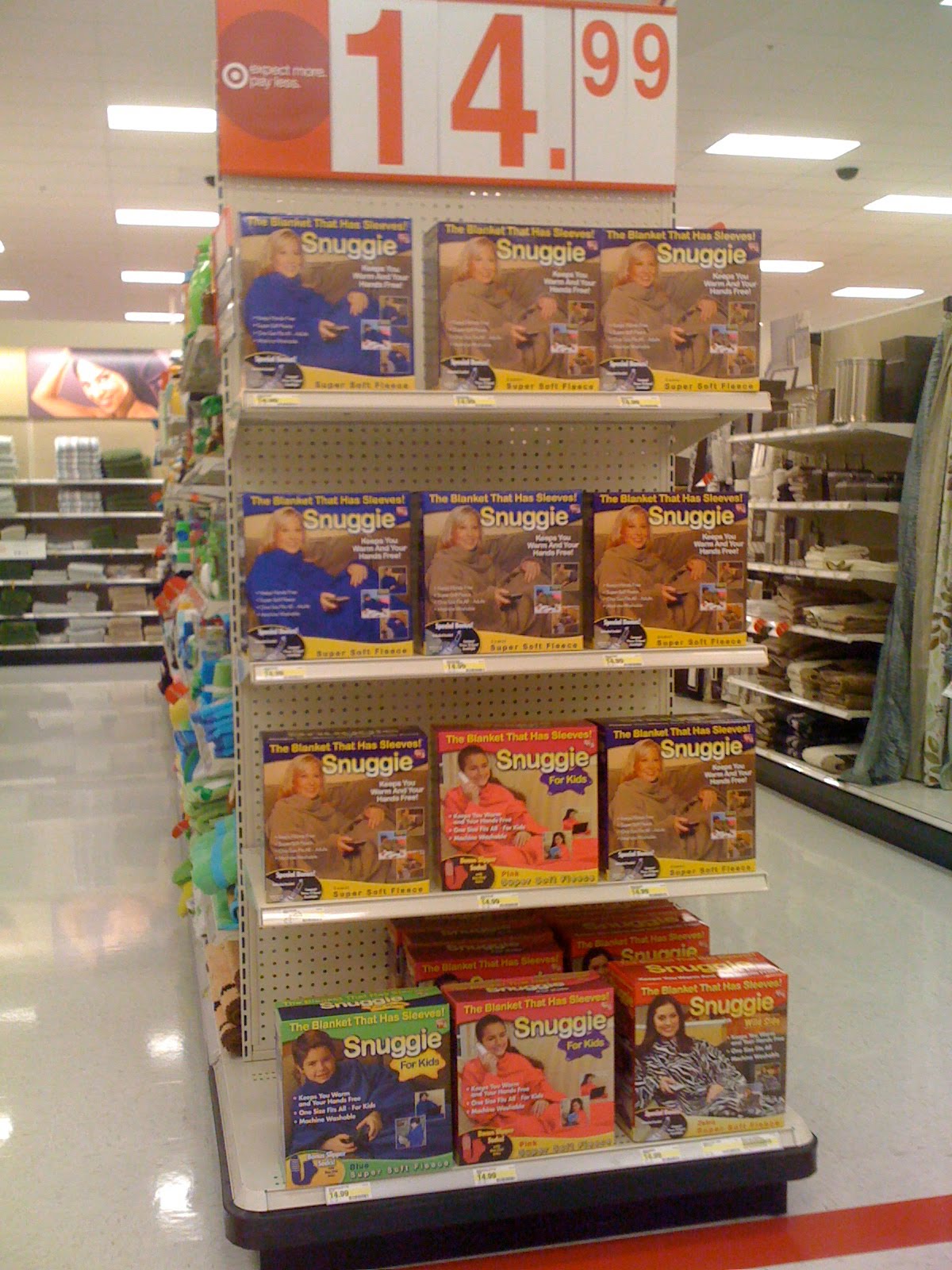
I would like to have called today buy-nothing day for us, if only to counter-balance the stupidity of people who will wait all night to get in a fight over an electronic hamster. Instead, we made our way to IKEA so grandma could get Buttercup part of her Christmas haul — a desk and bookcase to facilitate the changeover to a "big girl's room" — and one of the recently-built, urban-center malls in the Dayton area for some clothes. In the end, our little shopping trip pumped somewhere in the range of $700 back into the economy.
Such a sum isn't exactly what some people might dump out on the day, and it was a bare scratch on the whole gift question. Still, it seems notable to acknowledge that we were pulled by the desire to shop on the same day that so many other people went out to pound the pavement for questionable deals. It seems a validation of the cultural norm that is shopping — we do it so well in this country.
What struck me as I was walking around today, though, is the degree to which we are marketed common experiences. I've thought about this and written about it before, but it particularly struck me today when I realized that there were few, if any, locally-owned businesses in any of the places we went. Every shopping experience was standardized to the point that location simply didn't matter. And to an extent, individuality didn't matter — and was perhaps discouraged.
This is really an outgrowth of my past thoughts on place and identity. After all, if there is nothing to connect you to the place you are, what forms your identity? Can a series of brands and manufactured experiences really pass for identity? And if this is what we're raising our children with, what sort of identities will they possess when they come into their own? Will they see the value in unique experiences or will they be like the students I've taught and worked with who only ate at chain restaurants because anything else was "weird"?
Discuss.
(Photo is not from today's excursion.)
Thursday, November 26, 2009
This is what it comes down to...
I had a moment yesterday when I looked at Buttercup and realized she'd made another developmental leap. She was no longer the post-pre-K-early-elementary kid. Nope. She was a kid coming into her own right. She was finding ways to help on her own, ways to relate to people on her own. The shy kid was still there, but in her place was an increasingly interesting individual.
The other day, we were on our way from Richmond back to Dayton, and it proved to be one of the best trips we've taken yet. The difference between seven and six is radical. At seven, the kid is reading to me from the backseat. We are having full-on conversations. It's like she has suddenly become aware of the world.
The funny part about these developmental moments is that you can't prepare for them. No matter how many books you read or other parents you talk to, it is simply impossible to prepare for the moment that your kid makes the leap. Why? Because you suddenly have to adjust everything. If it's the kid deciding she no longer likes something she happily ate before, it's better to ask why she doesn't like it than to insist she should eat something she doesn't like. If she suddenly has distinct opinions about what she wants to do, it's better to find out why she no longer wants to do things she did before. And in all cases, it's best to adjust accordingly.
The brilliant part is that the kid can articulate her reasons at this age. If something tastes bitter, she can say so. If something tastes good, that can be part of it too. The trick as a parent is to find that space to adjust accordingly. It's not always easy, but like the koan about the reed in the wind, it's better to bend than to be rigid and break.
Count this as holiday lesson #743, and remember that your kid is actually a pretty decent little individual.
The other day, we were on our way from Richmond back to Dayton, and it proved to be one of the best trips we've taken yet. The difference between seven and six is radical. At seven, the kid is reading to me from the backseat. We are having full-on conversations. It's like she has suddenly become aware of the world.
The funny part about these developmental moments is that you can't prepare for them. No matter how many books you read or other parents you talk to, it is simply impossible to prepare for the moment that your kid makes the leap. Why? Because you suddenly have to adjust everything. If it's the kid deciding she no longer likes something she happily ate before, it's better to ask why she doesn't like it than to insist she should eat something she doesn't like. If she suddenly has distinct opinions about what she wants to do, it's better to find out why she no longer wants to do things she did before. And in all cases, it's best to adjust accordingly.
The brilliant part is that the kid can articulate her reasons at this age. If something tastes bitter, she can say so. If something tastes good, that can be part of it too. The trick as a parent is to find that space to adjust accordingly. It's not always easy, but like the koan about the reed in the wind, it's better to bend than to be rigid and break.
Count this as holiday lesson #743, and remember that your kid is actually a pretty decent little individual.
Tuesday, November 24, 2009
The World of Tomorrow!
I absolutely love these old videos from the heyday of the American Century. The world seemed like our oyster and technology was going to solve every problem and make our lives as squeaky clean as we dreamed they should be. Burnished white and seamless with dreams of magic technology making it all real... until the sixties came along and broke it all.
What's best is that they're always narrated with that same sonorous, comforting voice-over... just like our lives were supposed to be.
What's best is that they're always narrated with that same sonorous, comforting voice-over... just like our lives were supposed to be.
Friday, November 20, 2009
Friday Fun — a dose of surrealism
Brilliant video by Charlotte Gainsbourg and Beck. Just brilliant. Especially the pancake head.
Wednesday, November 18, 2009
Truth is so difficult.
And there are so many clueless people in this country. This stands right up there with the truck I drove behind today. It sported a bumper sticker that said "Where is the birth certificate?"
Wow.
(via Wonkette; and for the record, the answer to the bumper sticker is: "In a computer database in Hawaii, along with every other birth certificate in that state." *sigh*)
Wow.
(via Wonkette; and for the record, the answer to the bumper sticker is: "In a computer database in Hawaii, along with every other birth certificate in that state." *sigh*)
Monday, November 09, 2009
Friday, November 06, 2009
Back to normal, whatever that means.
Buttercup's mom has been down on the Eastern Shore on a research gig since early September. She came back this week, and it's been interesting to see how the dynamic will play. Buttercup has missed her, no question, and it will be nice to reclaim some weekend time without having to beg favors or figure out how to pay a sitter.
There's probably more to say about what it's like to have to balance it all again. There's more to say about Buttercup and her dynamic in all of it. But I have to confess that I've hit one of those moments when the thoughts and words just aren't meshing very well. It seems like there should be something profound to say about it — something that relates to parenting and children and divorce and balance — and yet there isn't a clear thread of thought.

It's a rare muddle. Perhaps we should call this an aborted post? Maybe I should ask this guy...
There's probably more to say about what it's like to have to balance it all again. There's more to say about Buttercup and her dynamic in all of it. But I have to confess that I've hit one of those moments when the thoughts and words just aren't meshing very well. It seems like there should be something profound to say about it — something that relates to parenting and children and divorce and balance — and yet there isn't a clear thread of thought.

It's a rare muddle. Perhaps we should call this an aborted post? Maybe I should ask this guy...
Return of Friday Fun: The Overheard at Work Edition
I actually overheard someone in my office say "It's not every day you get called a witch doctor!" This came immediately to mind. Enjoy!
Thursday, November 05, 2009
On Place and Identity
How's that for a pompous-sounding title? Or at least derivative of the very good essays written about the same? Either way, it's been on my mind a bit lately, and today my friend Brian jogged the idea a bit with a post about the Yankees' World Series win last night. In particular, Brian notes that I am a Midwesterner who lived in New York for several years before heading to grad school in northwest Arkansas.
This is true, and also brings up a question I've been asked for years: Where are you from? It's not the easiest question to answer, and the confusion is why I've never been comfortable calling myself from any place.
I was born in upstate New York — Ithaca, to be exact. I have a few recollections of this place that can't be ascribed to photos, but that's about it. We lived there for almost three years until moving to Iowa City, Iowa. My more-formed memories start there, but Iowa only lasted a couple of years. We left there and moved to Dekalb, Illinois, where I started Kindergarten at the too-early age of four. A year later, though, my mother accepted a job at the University of Dayton. We were an academic family, and the search for a tenure-track job was on, and my mother landed it. In our first year in Dayton, we lived in the tree-lined suburb of Oakwood, and a year later my father wrapped up work in Dekalb, and we came back together in a split-level house in Kettering. My father had also grown up in Kettering so there was a bit of family history. But only a bit. By this time, I was seven-going-on-eight and had already developed a gypsy-ish sense of place and home. Seven years later, my parents were divorced and I transferred schools back to Oakwood. It was the first (and perhaps only) move of my life that RE-connected me with anything.
On graduation from high school, I had two options — go to UD or take a ride up to Albion College. My grades in high school had been middling-to-poor, and I lost out on most of the schools I wanted to attend. There was no way I could stay in Dayton. I'd never really developed a deep attachment to the place, and had many, many memories I preferred to leave behind. Albion it was — for two years. I'd pre-determined that my time there would be short. I had fun and cleaned up my academic act a bit, but I also resisted any kind of anchoring. Instead, I spent my second year focusing on where else I could go. The list was long, but came down to the Boston area. My mother's roots are in the area; our summer house was a few hours up the road in Maine; and my best friend was in school there. It made a lot of sense, and when I landed at Brandeis in 1990, I felt like I'd come closer to "home." I knew that city well and loved it, but three years later, many of my friends had made the exodus to New York and my dream job at the time had turned into an unceremonious canning. I decided to follow my college friends to New York.
The city had always held a deep pull for me. I loved the rhythms. I loved the sounds. I loved the idea that no one in my immediate family had made it theirs. Hell, I even loved the dirt. I couch-surfed for several months while bouncing between the cities, and finally decided to take the plunge. It wasn't without danger, and I spent months trying to find a niche. I did part of that as a writer — though my lack of discipline got in the way. I did part of that as a pool player. I worked as a temp. I sold CDs to buy beer and ramen when work wasn't available. I got depressed. I got elated. It was amazing and awful at once. What I didn't do was give up on the place. In the end, New York was the crucible where I began to understand myself a little better. It was the lens through which I understood my world and my worldview. It was the place I began to learn how to keep and maintain friendships — a lesson I still work on to this day. I met cool people and worked cool places. I pitched some of the preppy trappings leftover from Dayton in favor of black t-shirts and jeans. I discovered that I loved design and disdained the music I'd studied for years. By the time I left for grad school seven years later, New York was the place that had come to define how I saw myself.
When I got to grad school in Arkansas, I was a New Yorker, but as Brian rightly points out, I was also a midwesterner. But the idea of myself as an Ohioan still didn't feel right. See, for all those years we lived in the midwest, we never stayed there. We traveled up to Maine and New York in the summers, and up to the Adirondacks in the winters. Home and the place you're from are created by community, but my community was always on the move. Friends bond over shared experiences in summers and vacations, and all my experiences were on the road with family and transient meetings with those other couple kids at the motel or staying up the road from our summer house. The degree to which this came true occurred to me as I was pressed to write about places and people I knew while in the MFA program at Arkansas. I had few places outside of Maine and New York that drew my heart. A few years later during my first marital breakdown, the kid and I landed back at my mother's house in Dayton. (It was there, in fact, that this blog started in 2004.)
The return to Dayton was a mixed experience. It was hard living back in my mother and stepfather's house, though I had no connection to growing up in that particular house. By the same token, it was easy to take Buttercup around the city to places that I remembered from my youth. As my job search ground on, I even flirted with the idea of landing there. The problem was everything felt like a fly in amber. I'd been a gypsy too long to return to the place and call it home. I'd already accepted that I probably wouldn't live in New York again for years if ever, but Brooklyn still felt more like home in my heart, more like a place I could always find myself. In Dayton, I just found that fly in amber. I knew (and know) many people who did stay, and for them it makes sense. It is where they were born and raised and where they wanted to bear and raise their kids. I was still looking for that place.
Moving to Richmond seemed like a fair step to finding that place, and it still does. We've made a good community of friends here. Buttercup has something that I never did — an elementary school that she may see all the way through and a group of friends she may build on for the rest of her life. The first place that truly happened to me was Boston, and New York was an outgrowth of that. If we stay in Richmond, years from now she will likely be able to answer the question of where she's from easily — born in Arkansas, raised in Richmond — while I will still be fumbling my answers. I guess that's why it was comforting when a friend-of-a-friend asked me where I was from and clarified her question by saying "In the South, what we mean when we ask where you're from is where you were born." And in that case, I have no choice but to take New York. Upstate.
This is true, and also brings up a question I've been asked for years: Where are you from? It's not the easiest question to answer, and the confusion is why I've never been comfortable calling myself from any place.
I was born in upstate New York — Ithaca, to be exact. I have a few recollections of this place that can't be ascribed to photos, but that's about it. We lived there for almost three years until moving to Iowa City, Iowa. My more-formed memories start there, but Iowa only lasted a couple of years. We left there and moved to Dekalb, Illinois, where I started Kindergarten at the too-early age of four. A year later, though, my mother accepted a job at the University of Dayton. We were an academic family, and the search for a tenure-track job was on, and my mother landed it. In our first year in Dayton, we lived in the tree-lined suburb of Oakwood, and a year later my father wrapped up work in Dekalb, and we came back together in a split-level house in Kettering. My father had also grown up in Kettering so there was a bit of family history. But only a bit. By this time, I was seven-going-on-eight and had already developed a gypsy-ish sense of place and home. Seven years later, my parents were divorced and I transferred schools back to Oakwood. It was the first (and perhaps only) move of my life that RE-connected me with anything.
On graduation from high school, I had two options — go to UD or take a ride up to Albion College. My grades in high school had been middling-to-poor, and I lost out on most of the schools I wanted to attend. There was no way I could stay in Dayton. I'd never really developed a deep attachment to the place, and had many, many memories I preferred to leave behind. Albion it was — for two years. I'd pre-determined that my time there would be short. I had fun and cleaned up my academic act a bit, but I also resisted any kind of anchoring. Instead, I spent my second year focusing on where else I could go. The list was long, but came down to the Boston area. My mother's roots are in the area; our summer house was a few hours up the road in Maine; and my best friend was in school there. It made a lot of sense, and when I landed at Brandeis in 1990, I felt like I'd come closer to "home." I knew that city well and loved it, but three years later, many of my friends had made the exodus to New York and my dream job at the time had turned into an unceremonious canning. I decided to follow my college friends to New York.
The city had always held a deep pull for me. I loved the rhythms. I loved the sounds. I loved the idea that no one in my immediate family had made it theirs. Hell, I even loved the dirt. I couch-surfed for several months while bouncing between the cities, and finally decided to take the plunge. It wasn't without danger, and I spent months trying to find a niche. I did part of that as a writer — though my lack of discipline got in the way. I did part of that as a pool player. I worked as a temp. I sold CDs to buy beer and ramen when work wasn't available. I got depressed. I got elated. It was amazing and awful at once. What I didn't do was give up on the place. In the end, New York was the crucible where I began to understand myself a little better. It was the lens through which I understood my world and my worldview. It was the place I began to learn how to keep and maintain friendships — a lesson I still work on to this day. I met cool people and worked cool places. I pitched some of the preppy trappings leftover from Dayton in favor of black t-shirts and jeans. I discovered that I loved design and disdained the music I'd studied for years. By the time I left for grad school seven years later, New York was the place that had come to define how I saw myself.
When I got to grad school in Arkansas, I was a New Yorker, but as Brian rightly points out, I was also a midwesterner. But the idea of myself as an Ohioan still didn't feel right. See, for all those years we lived in the midwest, we never stayed there. We traveled up to Maine and New York in the summers, and up to the Adirondacks in the winters. Home and the place you're from are created by community, but my community was always on the move. Friends bond over shared experiences in summers and vacations, and all my experiences were on the road with family and transient meetings with those other couple kids at the motel or staying up the road from our summer house. The degree to which this came true occurred to me as I was pressed to write about places and people I knew while in the MFA program at Arkansas. I had few places outside of Maine and New York that drew my heart. A few years later during my first marital breakdown, the kid and I landed back at my mother's house in Dayton. (It was there, in fact, that this blog started in 2004.)
The return to Dayton was a mixed experience. It was hard living back in my mother and stepfather's house, though I had no connection to growing up in that particular house. By the same token, it was easy to take Buttercup around the city to places that I remembered from my youth. As my job search ground on, I even flirted with the idea of landing there. The problem was everything felt like a fly in amber. I'd been a gypsy too long to return to the place and call it home. I'd already accepted that I probably wouldn't live in New York again for years if ever, but Brooklyn still felt more like home in my heart, more like a place I could always find myself. In Dayton, I just found that fly in amber. I knew (and know) many people who did stay, and for them it makes sense. It is where they were born and raised and where they wanted to bear and raise their kids. I was still looking for that place.
Moving to Richmond seemed like a fair step to finding that place, and it still does. We've made a good community of friends here. Buttercup has something that I never did — an elementary school that she may see all the way through and a group of friends she may build on for the rest of her life. The first place that truly happened to me was Boston, and New York was an outgrowth of that. If we stay in Richmond, years from now she will likely be able to answer the question of where she's from easily — born in Arkansas, raised in Richmond — while I will still be fumbling my answers. I guess that's why it was comforting when a friend-of-a-friend asked me where I was from and clarified her question by saying "In the South, what we mean when we ask where you're from is where you were born." And in that case, I have no choice but to take New York. Upstate.
Tuesday, November 03, 2009
Ponderings...

You may wonder why I've been so silent lately (and really for a while now). I've been wondering that too. I pondered whether it was because I was directing too much attention at Twitter and other online pursuits, not to mention a minor entrepreneurial concept a friend and I are developing. I've considered my parenting and workload as possibilities for eclipsing my blog time. I've considered the possibility that I should change the focus of the blog to jolt myself back into writing.
Really it's none of these. Or at least not a specific ONE reason.
As I said months ago, I wanted to stop using the blog as a navel-gazing forum. I felt it risked being too personal — which could both create problems for myself and other people and would turn it into nothing more than a public journal. A year ago, I decided to stop using it as a political forum because other people were doing it better and because it made me unhappy to consider how screwed our process is. I even burned out on Friday Fun music videos. I had a grand idea to FOCUS the blog — to give it an editorial bent — and make it stop being about ME.
The truth is though that the idea of focusing the content never really took root. There are areas and topics I'd love to explore more, but I don't have the time to make the blog even a part-time investigative endeavor. Nope. I have the time to use it as a fun little outlet for whatever catches my eye. Frankly, the truth is that Impolitic Eye always was about whatever caught my attention — whether personal and navel-gazing or public and political or badvertising and quirky. That said, I'm bringing Impolitic Eye back to its roots. I'm going to have fun digging into things again and accept that this particular forum can and should be just as quixotic and wide-ranging as my own interests.
Saturday, October 17, 2009
The annual trip to Ann Arbor — parenting lessons
Buttercup hurt me badly tonight. It wasn't direct or malicious, and I'm not sure she even realized how bad it was. The thing is she stole something — or rather four small charms — from a store. Then she lied about it.
Here's how it happened. My father, his daughter, Buttercup, and I were at the Ann Arbor farmers' market, and dad took the girls in to look at a funky little kids clothing store inside the building. Both girls were clamoring for charms bracelets, and my dad and I got on the same page for once. There were going to be no new trinkets for the girls.
Fast-forward a few hours. We'd been at the game, and the girls had been intermittent. There were good times and irritating moments. There was tiredness — a football game on a cold day can be loooooong. On balance, though, we were doing well.
Until we reached the Jolly Pumpkin Pub — a new brewpub that I needed to check out.
At some point in the meal, I playfully pulled Buttercup to me. There was an odd crunch in her pocket. I had an instant suspicion about it. I asked what was in her pocket. She said it was one thing, and I gave her an odd look. Then she said it was "bark." On questioning, she kept trying to explain why bark that she'd had no access to at any point in the day would be in her back pocket. After a few minutes of this, I escalated to threats.
First, she'd lose her allowance for the week. She was willing to do that. Second, she'd lose her allowance for the rest of the year. She was willing to do that. When I threatened to take away the Annie dress I'd just bought for her to wear for Halloween, then she melted down. Still, she wouldn't fess up to what was actually in her pocket. Finally, I just reached over and got the four charms out of her pocket.
She had stolen and lied about it. It was a willful act. And it felt like a gut punch to me. In seven years of parenting, I'd never felt so hurt or so challenged.
I told her that her mom and I would have to talk about it. She cried louder. I told her that she would have to return the charms to the store and apologize. There was more crying. I told her that she would be punished. Greatly. And to each of them, she whimpered that she would do anything — anything — not to have her mom hear about it, not to have to apologize to the store. She was not going to be off the hook, however.
At this point, I'm still at a loss for how to deal with it fully. The store was closed, meaning Grandpa will have to handle returning the charms, along with a letter from Buttercup. The kid knows that she did wrong, and that her mom will soon know that she did wrong. She knows that she will be punished. I just hope it all sticks in ways that make sense.
Here's how it happened. My father, his daughter, Buttercup, and I were at the Ann Arbor farmers' market, and dad took the girls in to look at a funky little kids clothing store inside the building. Both girls were clamoring for charms bracelets, and my dad and I got on the same page for once. There were going to be no new trinkets for the girls.
Fast-forward a few hours. We'd been at the game, and the girls had been intermittent. There were good times and irritating moments. There was tiredness — a football game on a cold day can be loooooong. On balance, though, we were doing well.
Until we reached the Jolly Pumpkin Pub — a new brewpub that I needed to check out.
At some point in the meal, I playfully pulled Buttercup to me. There was an odd crunch in her pocket. I had an instant suspicion about it. I asked what was in her pocket. She said it was one thing, and I gave her an odd look. Then she said it was "bark." On questioning, she kept trying to explain why bark that she'd had no access to at any point in the day would be in her back pocket. After a few minutes of this, I escalated to threats.
First, she'd lose her allowance for the week. She was willing to do that. Second, she'd lose her allowance for the rest of the year. She was willing to do that. When I threatened to take away the Annie dress I'd just bought for her to wear for Halloween, then she melted down. Still, she wouldn't fess up to what was actually in her pocket. Finally, I just reached over and got the four charms out of her pocket.
She had stolen and lied about it. It was a willful act. And it felt like a gut punch to me. In seven years of parenting, I'd never felt so hurt or so challenged.
I told her that her mom and I would have to talk about it. She cried louder. I told her that she would have to return the charms to the store and apologize. There was more crying. I told her that she would be punished. Greatly. And to each of them, she whimpered that she would do anything — anything — not to have her mom hear about it, not to have to apologize to the store. She was not going to be off the hook, however.
At this point, I'm still at a loss for how to deal with it fully. The store was closed, meaning Grandpa will have to handle returning the charms, along with a letter from Buttercup. The kid knows that she did wrong, and that her mom will soon know that she did wrong. She knows that she will be punished. I just hope it all sticks in ways that make sense.
Wilco, Ann Arbor — 10/16
Good times, old territory. I'm wearing a pair of 501s that are on their way to being retired, but I still love the jeans. They're comfortable. That's the way Ann Arbor feels to me — comfortable, known territory.
Seeing Wilco here last night was like bringing some new life into that old territory. Though I've seen them repeatedly over the years — first as Uncle Tupelo in 1992, and then three times since Yankee Hotel Foxtrot was released they consistently impress and amaze me in the shows. It seems that with each iteration they get tighter and more interesting as a band. What this allows them is a deep ground for turning out great renditions of recent songs and surprisingly energetic takes on tracks from their first album — and even sometimes from Tupelo days.
Last night, they mixed a healthy dose of Ghost with most of YHF. There was plenty of new stuff, of course, but the surprise came in what they played and what they didn't play from years past. I've never heard them pull "Box Full of Letters" out live or even do a complete wild card — "Just a Kid." Last night they pulled that out with a couple of spirited songs with Liam Finn joining in — "You Never Know" and "California Stars." There were some old favorites missing from Summerteeth and Being There, and I'm sure someone was crying over the omission of "Heavy Metal Drummer." The thing is, it was a 28-song set. In two-and-a-half hours.
Nels tore it up on the lead, and Pat Sansone was pulling all sorts of rockstar shimmies. Glenn was drenched by the end. Tweedy and Stirratt were as energetic as I've seen them. Still, the one odd note was the abrupt ending — particularly with a roadie waiting in the wings with a new guitar for Tweedy. The band seemed a little taken by surprise too. But anyone listening closely could hear how much Tweedy's voice was straining at the end. He seemed to be working at speaking in between songs. The best I can guess is that he finally gave out. But again... who can complain? They packed a hell of a set in those two and a half hours.
And like the city which is both comfortable and has a new surprise or two each year — some good, some not so good — the band I've followed so closely over the past few years was both a comfort and a great surprise.
Seeing Wilco here last night was like bringing some new life into that old territory. Though I've seen them repeatedly over the years — first as Uncle Tupelo in 1992, and then three times since Yankee Hotel Foxtrot was released they consistently impress and amaze me in the shows. It seems that with each iteration they get tighter and more interesting as a band. What this allows them is a deep ground for turning out great renditions of recent songs and surprisingly energetic takes on tracks from their first album — and even sometimes from Tupelo days.
Last night, they mixed a healthy dose of Ghost with most of YHF. There was plenty of new stuff, of course, but the surprise came in what they played and what they didn't play from years past. I've never heard them pull "Box Full of Letters" out live or even do a complete wild card — "Just a Kid." Last night they pulled that out with a couple of spirited songs with Liam Finn joining in — "You Never Know" and "California Stars." There were some old favorites missing from Summerteeth and Being There, and I'm sure someone was crying over the omission of "Heavy Metal Drummer." The thing is, it was a 28-song set. In two-and-a-half hours.
Nels tore it up on the lead, and Pat Sansone was pulling all sorts of rockstar shimmies. Glenn was drenched by the end. Tweedy and Stirratt were as energetic as I've seen them. Still, the one odd note was the abrupt ending — particularly with a roadie waiting in the wings with a new guitar for Tweedy. The band seemed a little taken by surprise too. But anyone listening closely could hear how much Tweedy's voice was straining at the end. He seemed to be working at speaking in between songs. The best I can guess is that he finally gave out. But again... who can complain? They packed a hell of a set in those two and a half hours.
And like the city which is both comfortable and has a new surprise or two each year — some good, some not so good — the band I've followed so closely over the past few years was both a comfort and a great surprise.
Friday, October 09, 2009
Ouch.

I've only said goodbye to Buttercup for a few weeks at a time, and she's old enough to understand a lot more now than this little girl. Still, I can't imagine the heartbreak for this dad headed out on deployment or the commanding officer who chose not to kick the girl out of formation. Godspeed home for him and so many others.
(Via Neatorama)
Sunday, October 04, 2009
And a good dog...

Reilly was adopted 10 years ago tomorrow. I told Buttercup it was 10 years today as a bit of enabling fiction — as our comp pedagogy professor called such subterfuges.
Be all that as it may, this pup has seen me through a lot. He's won over plenty of dog-haters and chased his fair share of squirrels and what-nots. These days, he's slowing down and not moving the way he did when he chased deer and foxes through the woods of northwest Arkansas. That said, he's been there for a lot of ups and downs, and he's turned into the best friend Buttercup and I could have had.

Cheers!
Thursday, October 01, 2009
I've got a good kid.

That's really what it all comes down to. I may get frustrated with her distractibility and with how slowly she can move in the morning. I may wish that she cleaned up after herself better or that she was a little more diligent about finishing projects, but the truth is I wish I did these things better. I may wish she didn't act like so much of a know-it-all at moments — and I know there are people who would say the same about me. I may wish she was a little better team player at times, but I also can't really fault her for following her own muse when it strikes her.
In the end, what it really comes down to is that I have a good kid. She does what she's told most of the time. She has rolled with some pretty strong punches over the years and come out a healthy, smart, loving, fun kid. She's not perfect, but then I'm not a perfect parent. I'm not sure I'd have it any other way really.
Just musing... your regularly scheduled programming will resume shortly.
Tuesday, September 29, 2009
Censorship is alive and well.
Picked this up from Neatorama. It's good to see that good old-fashioned American book banning is alive and well in the early aughts... Surf through the various efforts made to safeguard us and our children from the danger of ideas... How sad.
View Book Bans and Challenges, 2007-2009 in a larger map
View Book Bans and Challenges, 2007-2009 in a larger map
Tuesday absurdities!
Via Boing Boing, this just demanded to be posted. It's a dancing pig burlesque piece from 1907. Brilliant!
Thursday, September 24, 2009
The epidemic of OK.
I've been pondering the conundrum of restaurants around Richmond for a while now. L's description of her lunch yesterday at Balliceaux, the new hotspot, put a fine point on it. It was just "Okay." The falafel was overdone. The flatbread store quality. The ahi tuna on the salad cooked rather than seared. And her companion's rice/beans/pork plate piled as though it came from a cafeteria. All this from a restaurant that opened to stellar reviews just a month ago. It would be one thing if this was not the second "down" experience with the place.
On our first visit, we enjoyed a few small plates and a bottle of wine. It seemed a little pricey at $50 + tip, but not that much more than other places in town. (This is part of the problem, and I'll get back to it.) Still the crab cakes and cheese plate were excellent, and the service was good at the bar so we were willing to roll with it. Fast forward, however, a couple of weeks to our next visit. We sat at the bar again and skipped the bottle of wine, opting instead for a couple glasses apiece and entrees to follow our cheese plate. My pork belly was superb, but L's mussels were undistinguished at best. We got dessert for a friend for her birthday — a mini red velvet cake. With tax and tip, we had spent just north of $120.
Mind you, I don't intend to tear down Balliceaux. I like what they're trying to do, but it needs to be consistent from lunch to dinner. It also shouldn't feel like we're being gouged. No item on our orders was more than $17, and yet we walked away having severely nicked the month's eating-out budget. The problem is that this sort of thing — food that veers from great to just decent to downright bad and prices that jump rapidly — has become the norm in Richmond restaurants.
One of my favorite things about living in New York years ago was the abundance of little neighborhood restaurants. Often barely noticed by Zagat and other reviewers, these were the sorts of places where you could get a good meal and a bottle of wine and walk out for fifty bucks. You could spend a little more if you headed into the few higher-priced items on the menus, but still it was possible to eat well and inexpensively.
Richmond has only a few places like this. Sticking to the pastas and no appetizer, you can get out of Mamma Zu's or Edo's for that kind of money. Sharing a paella and a salad, you can almost get out of Kuba Kuba for that kind of money. A carafe and a couple of small plates at Can Can and you're still okay. And you'll eat well in any of these places. Try getting out of most other restaurants in that tier for a decent price, and it's almost impossible — unless you want to order a burger or pizza. Worse yet is the obsessive duplication of menu items around town. Worst is the fact that it's okay to be just okay. Our choices veer from glorified bar food (and, yes, there is a specific group of restaurants I'm thinking of here) to uninspired retreads of the same idea (another group of restaurants). Simply put, there's a surplus of places where you can eat middling food and get fair service and very few places where you can get great food and great service — without breaking the bank. (If price is no object and you're not looking for someplace kid-friendly, the options are wide open.)
What really bothers me, however, is that people seem to have accepted this as the norm. Richmond diners seem to have become so accustomed to fair food and Richmond restauranteurs so willing to oblige that there is little incentive for places to become better and/or introduce more reasonably priced menus.
A while back, I started to take two approaches to eating out. The first was to try things on the menu that should be consistent and good — a well-cooked steak, for instance, or crab cakes. The second approach was to order things that I would not — for whatever reason — cook for myself. If the results were good in either case, a return trip was merited. Unfortunately, I have been so often disappointed — and spent a great deal to be disappointed — that I've practically given up on the whole endeavor. After all, why spend the money if I can do better for less in my own kitchen?
It's sad, though, because I enjoy eating out. I enjoy breaking bread and being part of the community. I enjoy being given a meal that is prepared with care. Now if only we could have a few more little neighborhood joints with great and reasonably-priced food (that is not straight out of a Sysco truck), I'd be happy to put this screed aside. Food should be always be more than just okay.
On our first visit, we enjoyed a few small plates and a bottle of wine. It seemed a little pricey at $50 + tip, but not that much more than other places in town. (This is part of the problem, and I'll get back to it.) Still the crab cakes and cheese plate were excellent, and the service was good at the bar so we were willing to roll with it. Fast forward, however, a couple of weeks to our next visit. We sat at the bar again and skipped the bottle of wine, opting instead for a couple glasses apiece and entrees to follow our cheese plate. My pork belly was superb, but L's mussels were undistinguished at best. We got dessert for a friend for her birthday — a mini red velvet cake. With tax and tip, we had spent just north of $120.
Mind you, I don't intend to tear down Balliceaux. I like what they're trying to do, but it needs to be consistent from lunch to dinner. It also shouldn't feel like we're being gouged. No item on our orders was more than $17, and yet we walked away having severely nicked the month's eating-out budget. The problem is that this sort of thing — food that veers from great to just decent to downright bad and prices that jump rapidly — has become the norm in Richmond restaurants.
One of my favorite things about living in New York years ago was the abundance of little neighborhood restaurants. Often barely noticed by Zagat and other reviewers, these were the sorts of places where you could get a good meal and a bottle of wine and walk out for fifty bucks. You could spend a little more if you headed into the few higher-priced items on the menus, but still it was possible to eat well and inexpensively.
Richmond has only a few places like this. Sticking to the pastas and no appetizer, you can get out of Mamma Zu's or Edo's for that kind of money. Sharing a paella and a salad, you can almost get out of Kuba Kuba for that kind of money. A carafe and a couple of small plates at Can Can and you're still okay. And you'll eat well in any of these places. Try getting out of most other restaurants in that tier for a decent price, and it's almost impossible — unless you want to order a burger or pizza. Worse yet is the obsessive duplication of menu items around town. Worst is the fact that it's okay to be just okay. Our choices veer from glorified bar food (and, yes, there is a specific group of restaurants I'm thinking of here) to uninspired retreads of the same idea (another group of restaurants). Simply put, there's a surplus of places where you can eat middling food and get fair service and very few places where you can get great food and great service — without breaking the bank. (If price is no object and you're not looking for someplace kid-friendly, the options are wide open.)
What really bothers me, however, is that people seem to have accepted this as the norm. Richmond diners seem to have become so accustomed to fair food and Richmond restauranteurs so willing to oblige that there is little incentive for places to become better and/or introduce more reasonably priced menus.
A while back, I started to take two approaches to eating out. The first was to try things on the menu that should be consistent and good — a well-cooked steak, for instance, or crab cakes. The second approach was to order things that I would not — for whatever reason — cook for myself. If the results were good in either case, a return trip was merited. Unfortunately, I have been so often disappointed — and spent a great deal to be disappointed — that I've practically given up on the whole endeavor. After all, why spend the money if I can do better for less in my own kitchen?
It's sad, though, because I enjoy eating out. I enjoy breaking bread and being part of the community. I enjoy being given a meal that is prepared with care. Now if only we could have a few more little neighborhood joints with great and reasonably-priced food (that is not straight out of a Sysco truck), I'd be happy to put this screed aside. Food should be always be more than just okay.
Tuesday, September 22, 2009
Cancer.
We learned recently that a seven-year old friend of ours was diagnosed with cancer. The cancer is reportedly aggressive and advanced to Stage 4. It is currently inoperable and being treated with chemo.
As one friend put it, "No child should ever have to know what cancer is." As another said, "Certainly puts things in perspective, doesn't it?" I have very little to add to these apt statements. There are so many feelings — full of fears and hopes — that rattle around. In the meantime, I'll give Buttercup another hug and say a prayer for a family that really needs it.
As one friend put it, "No child should ever have to know what cancer is." As another said, "Certainly puts things in perspective, doesn't it?" I have very little to add to these apt statements. There are so many feelings — full of fears and hopes — that rattle around. In the meantime, I'll give Buttercup another hug and say a prayer for a family that really needs it.
Monday, September 14, 2009
Random thought...
I rarely watch TV. Maybe a baseball game, The Daily Show, Mad Men, and random shows on the Food Channel and MSNBC. Beyond that, not much. When I do watch TV, I marvel over the ads.
I've been in advertising and marketing in one way shape or form for almost 20 years. This means i know the tricks and lies. The strategies are transparent, and yet I'm still amazed by what advertising turns into in a pure mass-market medium. The strategies used to make unhealthy food sound healthy are simply stunning. The ways in which we are sold a vision of what our day-to-day lives should be gives me the willies.
I'll say more later. After The Daily Show.
I've been in advertising and marketing in one way shape or form for almost 20 years. This means i know the tricks and lies. The strategies are transparent, and yet I'm still amazed by what advertising turns into in a pure mass-market medium. The strategies used to make unhealthy food sound healthy are simply stunning. The ways in which we are sold a vision of what our day-to-day lives should be gives me the willies.
I'll say more later. After The Daily Show.
Thursday, September 10, 2009
The Public Option

This week, Buttercup started second grade. This week, we also had a dual "controversy" of Obama speaking to students starting school and speaking to the country about health care reform. The "controversies" came off the conservative fear that Obama might indoctrinate our children into doing well and might indoctrinate the rest of us into believing that national health care might be a good thing. What I still can't get past is the idea that there are people (conservatives, they call themselves) who argue that there is a problem with the president speaking to school children or that there is something wrong with offering health care to anyone who needs it.
To those who argue that national health care suggests entitlement and welfare and is simply a burden on people who deserve to keep their money, I ask whether it's wrong that Buttercup is healthy. Why? Simple: she was born with the assistance of Medicaid.
As a grad student, I couldn't afford reasonable health insurance. My monthly payments plus my payments under a deductible didn't make sense for a healthy man. When Buttercup's mother became pregnant, no one would extend coverage to us. Pregnancy is, after all, considered a pre-existing condition. My family offered some help, but Buttercup's mom suggested the idea of using Medicaid, or at least the Arkansas version of it. I had a slight pride issue to get past.
In the end, the experience couldn't have been better. We had the choice of care providers. We had the choice of hospitals. Buttercup had excellent pre- and post-natal care. There were no bureaucratic hiccups. Nobody managed our care besides us. The government didn't get "in the way." Ever.
The reality is we birthed Buttercup under a public option. Based on our experience, I challenge anyone to suggest that public options are a problem. I challenge any "conservative" who dislikes the idea of a society caring for itself to look at the picture of the girl walking into her second grad classroom — healthy, happy, and part of a middle class family now — and to tell me that a public option is a problem for our society.
Tuesday, September 08, 2009
a few notes and a brief cooking note
First, the notes.
Note 1: I began using a chimney this summer to start my grill. I love it, but I haven't gauged the fires properly yet. Between the chimney and the hardwood charcoal (not briquettes!) that I've been using, I get amazingly hot fires. Too hot, really. I've had a devil of a time figuring out timing and heat, as a result.
Note 2: I need to branch out while at the farmers market. I bring home a nice harvest and prepare it well (usually!), but I don't change up my game nearly enough. I don't buy many new ingredients. I don't challenge myself to stretch my wings beyond some of my tried and true preparations. If all goes well, we will take part in a winter CSA, and I will expand my cooking repertoire.
Now a cooking note:
In midsummer, I found myself with locally raised lamb steaks, corn, and peaches. I'd also snagged a loaf of parmaggiano and red pepper bread. The lamb went in with a chili-, sage-, and rosemary-spiked rub. The peaches were drizzled with a good balsamic. The corn was soaked (in husks) in salt water. The bread was sliced and drizzled with good olive oil. We were using my neighbor's gas grill. The corn went on first. It roasted for close to half an hour on the upper rack with a low convection fire. The fire was brought up and the lamb and peaches went on the grill. The peaches were to the side and the lamb spent 4 minutes on either side. The bread went on for the second half. The ingredients were stacked — bread first, lamb second, peach on top. We pulled an arugula salad with shaved parmaggiano on the side and called it dinner.
The flavors mixed beautifully. The lamb was perfectly medium rare and its juices infused the bread. The sweet and caramel of the balsamic-drizzled peaches countered the chili and spice of the other ingredients. With the salad and the corn, the meal was a damn-near perfect explosion of local, summer flavors.
Note 1: I began using a chimney this summer to start my grill. I love it, but I haven't gauged the fires properly yet. Between the chimney and the hardwood charcoal (not briquettes!) that I've been using, I get amazingly hot fires. Too hot, really. I've had a devil of a time figuring out timing and heat, as a result.
Note 2: I need to branch out while at the farmers market. I bring home a nice harvest and prepare it well (usually!), but I don't change up my game nearly enough. I don't buy many new ingredients. I don't challenge myself to stretch my wings beyond some of my tried and true preparations. If all goes well, we will take part in a winter CSA, and I will expand my cooking repertoire.
Now a cooking note:
In midsummer, I found myself with locally raised lamb steaks, corn, and peaches. I'd also snagged a loaf of parmaggiano and red pepper bread. The lamb went in with a chili-, sage-, and rosemary-spiked rub. The peaches were drizzled with a good balsamic. The corn was soaked (in husks) in salt water. The bread was sliced and drizzled with good olive oil. We were using my neighbor's gas grill. The corn went on first. It roasted for close to half an hour on the upper rack with a low convection fire. The fire was brought up and the lamb and peaches went on the grill. The peaches were to the side and the lamb spent 4 minutes on either side. The bread went on for the second half. The ingredients were stacked — bread first, lamb second, peach on top. We pulled an arugula salad with shaved parmaggiano on the side and called it dinner.
The flavors mixed beautifully. The lamb was perfectly medium rare and its juices infused the bread. The sweet and caramel of the balsamic-drizzled peaches countered the chili and spice of the other ingredients. With the salad and the corn, the meal was a damn-near perfect explosion of local, summer flavors.
Tuesday, September 01, 2009
Brief Pop Culture Notes
We're sitting on the couch watching the Food Network. Chopped just wrapped up. What comes to mind is how similar every one of these reality/competition shows has become. They all work on the same formula. The music seems canned and common across the whole genre. The edits and cuts seemed canned as well. When it comes to the food "reality" shows, watching is still fun because I end up thinking about techniques and approaches I've never considered. Still, from Chopped to Top Chef, the shows have gotten so formulaic that it doesn't matter which one you watch. They're basically the same.
Feel free to argue another side in the comments.
Feel free to argue another side in the comments.
Thursday, August 27, 2009
Buttercup's Back!
The kid came back last night. She was excited and clung to me when I met them at the door. I can hardly express how good it made me feel. I've spent weeks now trying to find balance in all aspects of my life, accentuating the positives and thinking about how the future can be even better. So when her face lit up, it made all of the thinking all of the pondering seem all that much better.
I'm glad she had a good couple of weeks with her mom and her mom's family. I'm also glad she was excited to be back. thankfully I had enough distractions that I didn't fall too far into my usual melancholy when she was gone. In fact, it was only at a couple moments this weekend when L caught me watching other kids that she said, "It's okay. She'll be back soon."
And now she is. Soon school will start. We'll buy school supplies. We'll make a trip to IKEA to upgrade her room from little girl space to big kid space. Plans for the near and medium future will (hopefully) continue to form and take shape. Life will be good. It just takes a smile and a laugh — and remembering to smile and laugh yourself.
I'm glad she had a good couple of weeks with her mom and her mom's family. I'm also glad she was excited to be back. thankfully I had enough distractions that I didn't fall too far into my usual melancholy when she was gone. In fact, it was only at a couple moments this weekend when L caught me watching other kids that she said, "It's okay. She'll be back soon."
And now she is. Soon school will start. We'll buy school supplies. We'll make a trip to IKEA to upgrade her room from little girl space to big kid space. Plans for the near and medium future will (hopefully) continue to form and take shape. Life will be good. It just takes a smile and a laugh — and remembering to smile and laugh yourself.
Tuesday, August 25, 2009
catching up — the garden
My garden experiment this year was a failure by all accounts. We began by intending to plant a full raised bed and scaled back to a limited container garden when I realized that the sun in the back yard wasn't going to sustain a full garden — the neighbors' trees had grown up too much in the past couple of years.
The next blow was the rain in June. I seeded my tomatoes, beans, peppers and basil early enough. Unfortunately, the surfeit of rain in June meant tons of water and little sun. The poor plants had to catch up in July and barely had a few beans, one pepper, one small tomato, and one decent batch of basil to show for the first couple months of summer. They were wonderful little starts, but the start never really evolved into a bigger harvest.
The rains continued in July, and the lack of sun become a serious detriment. The tomato plants I'd seeded still haven't grown enough and begun producing. The yellow pear tomato plant never flowered — which may be mollified by the fact that the yellow pear tomatoes never materialized at any vendor at the South of the James Market in Forest Hill Park either.
The current situation is dire. The pepper plant is promising one more pepper. There are several promising tomato blossoms and green tomatoes on the plans, but with August coming to an end and September approaching, it's hard to believe they'll amount to much. The basil is hanging on, and L has convinced me to move it into the kitchen for the rest of the year. With any luck, we'll be able to keep it going. We managed another couple of beans, but hardly enough to do anything with. The cucumber plant I started never even got going and is an utter failure.
I blame the weather and sun conditions, but I also blame time. Rather than finding the best solutions, I just tried to do a half-assed job. Next year, the goal will be to plant appropriate plants, or perhaps to share a community garden plot. Perhaps we will also have moved into a better spot for gardening by then. Who knows.
One other improvement I know I can make is to engage Buttercup more in the process. She enjoys planting and watering. She enjoys watching the plants produce. A little more attention from all of us and I think we'll have a better shot at success.
The next blow was the rain in June. I seeded my tomatoes, beans, peppers and basil early enough. Unfortunately, the surfeit of rain in June meant tons of water and little sun. The poor plants had to catch up in July and barely had a few beans, one pepper, one small tomato, and one decent batch of basil to show for the first couple months of summer. They were wonderful little starts, but the start never really evolved into a bigger harvest.
The rains continued in July, and the lack of sun become a serious detriment. The tomato plants I'd seeded still haven't grown enough and begun producing. The yellow pear tomato plant never flowered — which may be mollified by the fact that the yellow pear tomatoes never materialized at any vendor at the South of the James Market in Forest Hill Park either.
The current situation is dire. The pepper plant is promising one more pepper. There are several promising tomato blossoms and green tomatoes on the plans, but with August coming to an end and September approaching, it's hard to believe they'll amount to much. The basil is hanging on, and L has convinced me to move it into the kitchen for the rest of the year. With any luck, we'll be able to keep it going. We managed another couple of beans, but hardly enough to do anything with. The cucumber plant I started never even got going and is an utter failure.
I blame the weather and sun conditions, but I also blame time. Rather than finding the best solutions, I just tried to do a half-assed job. Next year, the goal will be to plant appropriate plants, or perhaps to share a community garden plot. Perhaps we will also have moved into a better spot for gardening by then. Who knows.
One other improvement I know I can make is to engage Buttercup more in the process. She enjoys planting and watering. She enjoys watching the plants produce. A little more attention from all of us and I think we'll have a better shot at success.
Wednesday, August 19, 2009
Touring Lewis Ginter Botanical Garden

A little over a month ago, Jonah Holland was kind enough to invite me and Sarah of Roaming Virginia for a private tour of Lewis Ginter Botanical Garden. I brought Buttercup along, figuring it would be a good chance for her to get the inside scoop on one of her favorite places around town.
I'd been in touch with Jonah via Twitter, and we have a slew of mutual friends in Richmond. Given how many of us have kids and are loosely or directly involved in creative professions, sometimes it seems like a little thirty/forty-something parent mafia, all slightly interconnected. In any case, after meeting Jonah, she took us out for our first stop at the community garden.

Ginter received a grant this year to grow 10,000 pounds of vegetables for the local food bank. It was/is an ambitious task driven by volunteer support and community contributions. When we visited, they had already harvested nearly 2,000 pounds of vegetables and received a few hundred more from personal donations — people with gardens more successful than mine.

We had a chance to speak with the associate director, who explained that they'd opted to go with conventional rather than organic methods out of expediency and cost — they'd been offered a substantial supply of mulch. Still, they weren't treating the plants and sought more organic or natural methods of pest control. Regardless, it was clear that the program was proving to be a success — after all, affluence shouldn't determine whether a person can afford fresh, local produce.
Next up was a stop at the Butterflies Live! exhibit.
 Here Buttercup was able to show off her stellar knowledge of butterflies and moths. There were some truly remarkable specimens, including one with a wingspan of nearly a foot. The butterflies and moths flit freely around, and you're cautioned before entering not to touch them if they happen to land on you. The brilliant part is that you can visit repeatedly and be assured of seeing different varieties of butterflies and moths.
After a bit more wandering around, we landed in the children's garden. Buttercup knows the place well, but it was still a pleasant surprise to come across blackberry bushes bursting with berries and fairy houses. It was a further reminder that it would be grand to see a bigger cross-section of Richmond using and taking advantage of the gardens... butterflies, squash and all.
Friday, August 07, 2009
Coming back slowly
There are few things more perfect than a bowl of amazing mussels on a small island off the coast of Maine...


Thursday, August 06, 2009
More adventures
More things to write about... family, goats and their cheese, islands... but for now, there's this:


Tuesday, August 04, 2009
The Way Life Should Be...
I'm still pondering the next steps here and trying to decide whether "Impolitic Eye" really speaks to the foodie and parenting directions I want to take this little endeavor. But for now, there's this...


Thursday, July 30, 2009
coming back soon
I've just completed my technological renovation. That doesn't mean that everything is fully operational, but at least I'm stepping forward with ways to be more productive and pursue some of my sideline goals. For instance, this is the first picture from the new-to-me D50. I'm not sure why she looks so glum, though...

We leave for Maine tomorrow. Time for a little recharge.

We leave for Maine tomorrow. Time for a little recharge.
Friday, July 24, 2009
Been on hiatus
I guess you could say I've been on hiatus for a couple of weeks. There's a great deal to write about — from a couple new meal adventures, to the exploding growers market scene, to an amazing tour of the community garden and Butterflies Live! at Lewis Ginter Botanical Garden. There are little parenting adventures, and a few ups and downs of single parenting to recount.
I'm also considering a bit of rebranding for the blog. "Impolitic Eye" was a name that came about five years ago as I was contemplating the political state of the country in the lead-up to the 2004 election. It doesn't necessarily fit my vision for what I want to write about or what my goals are — and believe it or not I have a few goals for this little project both in terms of focus and content, and links to other bloggers and blog networks. What that name will be, I'm still not sure. It's a work-in-progress in my head right now.
In the next few days, I'm going to make a shift in computers back to a laptop in the hopes that a little more portability and accessibility will give me the flexibility to work where and when I want. Believe it or not, I'm coming back.
I'm also considering a bit of rebranding for the blog. "Impolitic Eye" was a name that came about five years ago as I was contemplating the political state of the country in the lead-up to the 2004 election. It doesn't necessarily fit my vision for what I want to write about or what my goals are — and believe it or not I have a few goals for this little project both in terms of focus and content, and links to other bloggers and blog networks. What that name will be, I'm still not sure. It's a work-in-progress in my head right now.
In the next few days, I'm going to make a shift in computers back to a laptop in the hopes that a little more portability and accessibility will give me the flexibility to work where and when I want. Believe it or not, I'm coming back.
Thursday, July 09, 2009
Summertime and the livin' is...
You'd think summer would be a time of unmitigated fun. Lots and lots of pool time. Farmers markets. Perfect weather. The annual Maine trip. Lots of extra time to do kid stuff with fewer constraints.
It all sounds great, but the truth is that summer is becoming a time of deep melancholy. The school year means a predictable routine both with the kid around the house and with a reliable school pattern. The summer, however, means a break in patterns. Camp throws different schedules into the mix — especially when it comes to the weeks at the beginning and end of the summer. The kid's mom and I also shift to more of a shared schedule. And this is where the real problem occurs.
We generally work well on parenting and scheduling matters when the schedule is reliable. When transitions occur, our communication moves into less reliable territory. Moreover, the differences in how we approach parenting really come into play.
As the switch to a week-to-week schedule approached, I told Buttercup about it. She seemed genuinely surprised. She asked why we would change schedules, and I explained that it's what we had agreed upon a couple years ago. I also reminded her that we had done it last year. She accepted that, but she still seemed a little off.
That feeling has continued a bit over the past couple of weeks. As the switch to staying at her mom's has approached this week, she has had a few bedwetting incidents. She has also seemed needier and much more sensitive, in her own world in ways that can be both adorable and frustrating at the same time. Apparently, this is just another case where our feelings are in concert, however, because I too have been a roller coaster of emotions and stress.
It seems I've also hit the point where I can't shut off my parenting side at all. The house is lonely without the kid, no matter how many people are around. The thought of not having to get her ready for camp in the morning brings no solace. In fact, I will end up spending much of my "down" time wondering whether I'll be called on for a pool trip (good) or an emergency (bad). This feeling is nothing new, and I've written about it before. What seems different this year is the depth of it. In fact, I feel the time away from my role as dad even more this year than in previous years.
The bright sides are few. I will be busy at work and busy trying to get a handle on things at home again. I will also have a bit more time to enjoy adult time. For Buttercup, the bright side is of course that she gets more time with mom. I can't help feeling, though, that her surprise at and questions about the shift in schedules are a sign of a deeper reliance on something else.
It all sounds great, but the truth is that summer is becoming a time of deep melancholy. The school year means a predictable routine both with the kid around the house and with a reliable school pattern. The summer, however, means a break in patterns. Camp throws different schedules into the mix — especially when it comes to the weeks at the beginning and end of the summer. The kid's mom and I also shift to more of a shared schedule. And this is where the real problem occurs.
We generally work well on parenting and scheduling matters when the schedule is reliable. When transitions occur, our communication moves into less reliable territory. Moreover, the differences in how we approach parenting really come into play.
As the switch to a week-to-week schedule approached, I told Buttercup about it. She seemed genuinely surprised. She asked why we would change schedules, and I explained that it's what we had agreed upon a couple years ago. I also reminded her that we had done it last year. She accepted that, but she still seemed a little off.
That feeling has continued a bit over the past couple of weeks. As the switch to staying at her mom's has approached this week, she has had a few bedwetting incidents. She has also seemed needier and much more sensitive, in her own world in ways that can be both adorable and frustrating at the same time. Apparently, this is just another case where our feelings are in concert, however, because I too have been a roller coaster of emotions and stress.
It seems I've also hit the point where I can't shut off my parenting side at all. The house is lonely without the kid, no matter how many people are around. The thought of not having to get her ready for camp in the morning brings no solace. In fact, I will end up spending much of my "down" time wondering whether I'll be called on for a pool trip (good) or an emergency (bad). This feeling is nothing new, and I've written about it before. What seems different this year is the depth of it. In fact, I feel the time away from my role as dad even more this year than in previous years.
The bright sides are few. I will be busy at work and busy trying to get a handle on things at home again. I will also have a bit more time to enjoy adult time. For Buttercup, the bright side is of course that she gets more time with mom. I can't help feeling, though, that her surprise at and questions about the shift in schedules are a sign of a deeper reliance on something else.
Friday, July 03, 2009
Summer's here
I apologize to those few of you who are regular visitors for the recent light posting. It's been a busy, up-and-down week. Happy Fourth of July... I'm off to the pool.
Wednesday, July 01, 2009
trust is what it all comes down to
The NYT published an utterly brilliant, potentially tear-inducing piece by Simon Van Booy on being a single father the other day. In it he recounts the loss of his wife to a sudden, fatal illness and his subsequent path of raising his daughter alone.
He touches on some important moments. He builds friendships with mothers, taking advice and shared experiences from them. He worries about cultural and media role models for his daughter is in the thick of the Princess phase. He struggles to find other men with common experiences to share and have a community. Ultimately, he finds that he just "thinks differently about everything" and manufactures happiness and memories with his daughter when and where he can. And when he gives a thumbnail description of the evening when all aspects of life routine go slightly wrong, I can't help but feel like he's given a thumbnail of my life in the whole piece.
The truth is being a single parent isn't easy, but it also isn't as hard as some people make it out to be. You make your own reality, your own moments, and when it comes to the ups and downs of daily life and routines, we muddle through the same way everyone else does. I recognize (and have written extensively about) the choices and compromises in my life, but then there are moments like the ones Ivey describes making eggs in the kitchen and later shaving that wipe out any sense of loss for the choices made.
The other day, I carved out a day just to spend with the kid. We haven't had many of these moments recently — whole days and activities that were our time — and I missed that connection. It occurred to me that in the midst of my work schedule, her camp schedule, the random detritus of daily life, relationships, social times with friends and neighbors, sleeping and eating, I was forgetting to make space for father-daughter time. By this, I don’t mean going to a movie or eating dinner; I mean taking little trips, leaving unstructured time for exploration and little adventures. When we came to the end of that day and were tired from going out in the woods and then to the pool, I saw smiles from Buttercup I haven’t seen in a while. They might have been there, but I wasn’t paying as much attention. When we sat down to watch baseball, then, and she fell asleep on my lap and I listened to her breathing settle into a deep sleep, I felt more at ease than I have in a while.
I thought about this again after a conversation with B Mére about schedules. We were moving into the summer schedule of traded weeks (always a melancholy time for me), and she wanted to feel free and clear to take the kid out of daycamp when she had the time and inclination. I reacted and defended the social time and camp activities as important for Buttercup. But the truth is I was reacting against B Mére’s ability to make and create time for fun. I wanted that same freedom.
And this is where my experience and Van Booy’s most diverge. He lost his wife to death; I lost mine to divorce. Ivey must struggle daily with the pain and emptiness of that loss and his daughter’s reactions to it; he won’t struggle with the clotted communication and conflicting patterns of parenting with an ex. He won’t have to deal with any lurking resentments and occasional competition that can linger after a divorce. Regardless, this is not about comparisons.
After reading Van Booy’s piece, I was reminded that ultimately this life is about a child’s trust and small, good moments. Read his words.
He touches on some important moments. He builds friendships with mothers, taking advice and shared experiences from them. He worries about cultural and media role models for his daughter is in the thick of the Princess phase. He struggles to find other men with common experiences to share and have a community. Ultimately, he finds that he just "thinks differently about everything" and manufactures happiness and memories with his daughter when and where he can. And when he gives a thumbnail description of the evening when all aspects of life routine go slightly wrong, I can't help but feel like he's given a thumbnail of my life in the whole piece.
The truth is being a single parent isn't easy, but it also isn't as hard as some people make it out to be. You make your own reality, your own moments, and when it comes to the ups and downs of daily life and routines, we muddle through the same way everyone else does. I recognize (and have written extensively about) the choices and compromises in my life, but then there are moments like the ones Ivey describes making eggs in the kitchen and later shaving that wipe out any sense of loss for the choices made.
The other day, I carved out a day just to spend with the kid. We haven't had many of these moments recently — whole days and activities that were our time — and I missed that connection. It occurred to me that in the midst of my work schedule, her camp schedule, the random detritus of daily life, relationships, social times with friends and neighbors, sleeping and eating, I was forgetting to make space for father-daughter time. By this, I don’t mean going to a movie or eating dinner; I mean taking little trips, leaving unstructured time for exploration and little adventures. When we came to the end of that day and were tired from going out in the woods and then to the pool, I saw smiles from Buttercup I haven’t seen in a while. They might have been there, but I wasn’t paying as much attention. When we sat down to watch baseball, then, and she fell asleep on my lap and I listened to her breathing settle into a deep sleep, I felt more at ease than I have in a while.
I thought about this again after a conversation with B Mére about schedules. We were moving into the summer schedule of traded weeks (always a melancholy time for me), and she wanted to feel free and clear to take the kid out of daycamp when she had the time and inclination. I reacted and defended the social time and camp activities as important for Buttercup. But the truth is I was reacting against B Mére’s ability to make and create time for fun. I wanted that same freedom.
And this is where my experience and Van Booy’s most diverge. He lost his wife to death; I lost mine to divorce. Ivey must struggle daily with the pain and emptiness of that loss and his daughter’s reactions to it; he won’t struggle with the clotted communication and conflicting patterns of parenting with an ex. He won’t have to deal with any lurking resentments and occasional competition that can linger after a divorce. Regardless, this is not about comparisons.
After reading Van Booy’s piece, I was reminded that ultimately this life is about a child’s trust and small, good moments. Read his words.
Subscribe to:
Posts (Atom)